Showing posts with label Queenstown. Show all posts

Thursday, 8 February 2018

Welcome to 2018


It has been - WOW! - nearly two months since my last post! I know, that’s a long time right? I hope you will forgive me for neglecting you for so long, but I hope my reason will mollify you somewhat, or at least patch things up a bit.
Initially, I was just going to take a couple of weeks off from the blog. I figured that you guys would rather be with your families than sitting, reading blogs. But then, around Christmas, my father received news that he needed pretty damn urgent surgery on his heart pretty damn urgently. Plans were thrown out the window and everyone rallied round to get him through with a minimum of stress (for him!). The surgery went well and everything was on track, but my father has a tendency to do things the hard way (it’s a family trait – you should see my scar tissue!). So he ordered the "Complication No. 1 Platter" with a side order of "Readmission to Hospital". Eventually he and Cookie (step mum – and not the evil type, so win!) got home to Tasmania from Melbourne and I
This is Max, 14yo nutter!

could leave my doggy sitting job (did you see my Instagram post?) and get back home. Phew sums it up, I think.
I’m not fishing for sympathy here, gang, just hoping for forgiveness and continued (and expanding – tell your friends!) readership. I promise I will not let you down again, until the next time I let you down. But it will only be for reasons like the above, so...
This is Luka, all 'tude and argument!
Right! So what’s on the books for 2018? Well, I’ve got a couple more photo projects I will be starting this year that I'll be blogging about; I will be finishing my Q West Gallery project and giving you a run down on what happened, what worked and what didn’t; I’ll keep going with my news/editorial posts; and I am hoping that, with your help, I will be able to add a new feature to my Friday’s. It will be slow going at the start, but if we can get my readership numbers up, it will speed up. Vague, huh (questions get answers)?
This was just a quick note to let you know I’m still here and I’m still blogging. I’ll return to my regularly scheduled posting as of next week, so for now I’ll sign off and await your chastisement.
Please check out my portfolio at:
You can also find me at:
And I am @BobCartPhoto on Twitter

Wednesday, 13 December 2017

Photos of the Q-West Gallery Artists


I’m finally home from my dog-sitting assignment in Queenstown and I have a lot to go through. I have interviews with the five key artists at Q-West Gallery, photos of some of these artists at work and 80% of the portraits of those key artists. And that’s what I thought I would talk about today – the “80%” and the “portraits”.
As I have mentioned in the past, I am more about nature photography than anything else. Wildlife, landscapes and macro photography of the natural world are the kinds of things that pique my interest. So you can probably guess how much experience I have with portraiture. That’s right, none! That meant I had to approach the portrait phase of my photo story project with a certain level of preparation.
The first thing I did was search for everything I could find online about lighting, posing, selecting the moment, choosing the background, etc, etc, etc... And that was also the last thing I did. The more I read, the more I found myself thinking how artificial the final image would be. I’m not saying there is anything wrong with portraiture or portrait photography, but I am saying that the practice of portrait photography doesn’t fit with my natural aesthetic (pompous but true!). When I thought about the portraits I wanted of my subjects I realised that I wanted my subjects to be themselves, more than anything. So I changed my approach.
I decided that I wouldn’t sit my subjects, pose them, light them and photograph them. Admittedly, part of my decision came about because I couldn’t do any of that. I have no flashes and no experience with them, so custom lighting was out; I have no studio and no access to a studio so I had no control over the background I would be using; and I have no idea how the hell you are supposed to get your subjects to pose! I mean, how does that work?!
But mostly my decision came about because I wanted photos of my subjects as they really are. I wanted their expressions, their gestures, their ‘poses’ to be 100% natural because, to my mind, you see far more of the subject of a photo when he or she is allowed to be themselves. To get that clearer view of who my subjects really were, I decided to try and capture the perfect image of each artist during the interviews.
Initially I had intended just sitting down with my subjects and interviewing them where I found them. I would cause minimal disruption for the subject and they would be able to meet me in a place of their choosing, thus making them more comfortable with the interview process. The decision to capture the portraits during the interviews required a bit of a rethink.
Fortunately, my super-secret contact had rooms right beside the gallery that had nice big windows which would let in a decent amount of natural light. By setting up an interview space (two comfy seats) right beside the large windows and draping a white sheet in such a way that it curved around behind the subject, I could use the natural light to illuminate my subjects. The sheet worked nicely as a soft reflector, bouncing light in to the unlit side of the subject. As you can see from the examples here, it seems to have worked quite well.
James Dunn
Dave Fitzpatrick
My first two interview-cum-photo shoots, Dave Fitzpatrick and James Dunn, worked out rather well. Both subjects are well lit, clear, and in focus. To contextualise to subjects a bit more I had them select pieces of their art to display around them, thus giving you not only a feel for the artist, but also for their art. With James this was easy – I could hang his quilt behind him and have him simply hold his marionette. That way I could use my best piece of glass (Nikkor 50mm f/1.8G – 75mm equivalent on my D3200 DX body). In order to fit both Dave and his art into the one image in the relatively confined space I had to work with, I had to go to my widest piece of glass (Nikkor 18-55mm f/3.5-5.6G – 27-82.5mm equivalent). Not great glass, but it got me my shot, so...
Denise Mitchell
For subject number three, Denise Mitchell, it was easier to meet her in her home. The lighting situation was more challenging but, by the simple expedient completely rearranging her lounge room and surrounding her with boards of white corflute, I was able to use her skylight to get enough light into her face to get a good shot. As every part of her home spoke to Denise’s personality, and I could decimate her lounge to my satisfaction, I could get the space I needed to use my nifty fifty again and still bring in some of the environment.
Mal Gotjes
Mal Gotjes, my fourth subject, is a very private individual, not really given to placing himself in the forefront, as it were. Put another way, he’s kinda shy. In order to help him feel as comfortable as possible I decided we could do the interview-cum-photo shoot in the workshop part of the gallery. That was Mal’s base, the place he was most comfortable, and just happened to be filled with his works and the tools of his art. The only issue I had was that, once again, I was forced to set up in a tight space and use my kit lens again. I think it came out alright, though.
My final subject, Bob Cartledge (AKA my super-secret contact, AKA Daddy dearest) proved to be the simplest. We got into the interview space, I set up my camera with the nifty fifty and started the interview. And my father danced around in his seat more than a break dancer with a cramp. Movement was a problem for all my subjects, really, but I brought this one up because I was unable to get a good, in-focus shot. Well, that’s not technically true. I did manage to get sharp focus... on Dad’s ear! Fortunately I have repeat access to this subject (I better have if he wants his Christmas present!) so I can redo the shoot.
Bob Cartledge - I made this a bit bigger so you could see the crisp, sharp earlobe!
And this brings me to my point for this post; you never know what is going to happen on a shoot, so you need to make sure you have a back-up plan. In my case, I knew I could get repeat access to my subjects, so I knew I could go back if something went wrong. If I hadn’t had that option, I would have made other plans for the shoot. Most likely I would have dragooned a family member to help me out and spent a bit of cash getting myself set up so I could shoot tethered to a laptop. That way I could check my shots then and there and decide whether I had got what I needed or if I needed to keep going.
So, my Dad is the 20% of the portraits I didn’t get, and I’m italicising ‘portrait’ because they’re not your traditional portraits. As far as I know, anyway. What do I know about portraits?!
Right! So what’s next? Well, I’ll be heading back down to Queenstown for Christmas but I won’t be working on the project then cos’, you know, Christmas! Which means it will probably be into the New Year before I can get back down there for my project. On that visit I’ll get the rest of the shots I need, I’ll do another walk-through on the gallery floor to see if there is anything that grabs me and then I get to start on the hard part – laying out the story. Hopefully I’ll be done by March... 3001!
What are you thinking, folks? How did my images come out? Do you have any tips or tricks for me for my next portrait shoot? What experiences have you had on shoots recently?
Let me know!

 I hope you enjoyed the read!
Please check out my portfolio at:
You can also find me at:
And I am @BobCartPhoto on Twitter


Tuesday, 28 November 2017

Dunn Quite a Lot


Guess what? Turns out I can do a blog post this week. And next week. Yay for me!
As I think I’ve mentioned at least once in the last week, I am back in Queenstown to continue work on my photo story about Q-West Gallery. While I’m down here I am interviewing artists who work and exhibit at Q-West Gallery. I’ve done two interviews so far and I have found that there is a great amount of depth behind the artists here. So much so that I felt I had to write about it. But I don’t want to rabbit on too much because, well, photo story. So what to do, what to do?
I think I’ll talk a little bit about James Dunn (He prefers Jim, and I know he’s going to be reading this, so there’s this evil little voice in the back of my mind saying ‘call him James!’. But I’ll defer to the fact that he’s bigger than me and call him ‘Jim’).


Now there is a hell of a lot about Jim that I can talk about. I can talk about the fact that he is a blind sculptor and quilter and wood carver. I can talk about the fact that he has worked in television and radio and healthcare. I can talk about… man! There’s a lot to talk about! But I’ve decided to talk about the impression I got of the man during the interview.
Jim is a 53 year old man with Autism. Don’t get the significance of that? Then let me explain. Jim was an autistic child during a time when there was no distinction between autism and ‘mental retardation’, to coin the term of the day. And not only was he an autistic boy, he was a blind autistic boy. Imagine the nice little cubby hole that would have made for him in the welfare system of the day!
Jim made it plain that, for much of his formative years and into his adult life, the things people were most interested in telling him were what he couldn’t do. The focus of family, social services, educators, everyone was on Jim’s limitations, not his capabilities. And I honestly believe that was the best thing that could have happened to him. Because it motivated Jim to prove them wrong.
This blind autistic boy, at the age of eight, completed his first ever artistic work; a quilt sewn on his great grandmother’s Singer sewing machine. Crafted by a child supposedly ‘mentally retarded’ and incapable of just about anything, as decided by a fresh-faced young psychologist straight out of school with a book of definitions.
So what else has Jim done to prove the system wrong? Well there’s the 30 years of community radio, including production and hosting late night talk back. There’s the television where he was a technician, a cameraman (no joke! According to Jim he just worked the focus until it was at its least blurry. And it worked!) And he was producer/director of his own show.
Now, in Queenstown, Jim is the secretary of the local Men’s Shed, and key in the recent acquisition of funding for that shed, he is an active member of the Friday afternoon Quilting Group and of the Q-West Gallery (funnily enough). And at home he carves wood.
And this is all very interesting and makes for a compelling story and had absolutely nothing to do with why I chose to tell you about Jim. You see, when organising this interview I asked Jim to bring in some of his pieces so that I could capture images of Jim with his work. During the interview, I asked Jim to talk to me about the quilt he brought with him. It was during this description that I saw the complex and subtle mind that lay behind all the history and all the labels. I saw someone with a deeper understanding of himself and his autism than any supposedly ‘normal’ and apparently ‘healthy’ person could hope to achieve. His description of the quilt, the meaning of the colours, the nuanced design and construction, the intentional disparities all served to paint a picture for me, not of the autistic blind man, but of the highly intelligent man, the highly skilled artist, it had been my pleasure to talk with.
And that is the point I want anyone reading this to take away; look beyond the surface. Ignore what you can see, what you are told is there and what you expect to be there. Do that and you will see what is there. Jim the Autistic Blind Man is far, far more than those labels convey, but many people have allowed those labels to define him. And man, have they missed out!

Thursday, 23 November 2017

Back to Queenstown for the Photo Story


You may have noticed over the last couple of posts that I keep banging on about not being home next week. That’s because I will be dog-sitting at my father’s house while the oldies are off visiting my sister and her boys. And while I’m down there I am hoping to get the rest of the leg work done for my photo story on Queenstown’s Q-West Gallery.
So far I have got some images presenting the styles of art commonly on display at the gallery, the opening event of the galleries latest exhibition and some shots of artists at work. To complete the project I still need to get interviews with some of the artists that regularly exhibit at the gallery, images of those artists at work and some portraits.  I also still want to get some shots situating the gallery in the town but, to be honest, I cannot for the life of me figure out how! You have to see the problem to understand.
For today’s post I thought I’d give you a run down on my preparations for the tasks ahead. I’ll tell you about the gear I’ll be using, my preparations for the interviews, and the challenges I expect to be facing.
Okay, let’s start with...
The Interview
I may not know much about photography but I am pretty good at conducting a research interview. And what I have found that I always need to conduct an effective interview is the right recording equipment. For me, that equipment is:
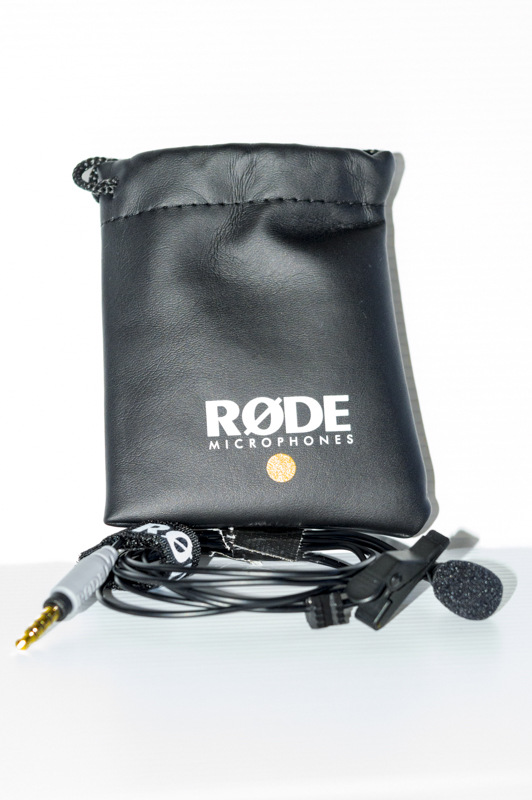
·   Rode Smartlav+ - a low-cost, high quality lapel microphone designed specifically to work with smart phones or tablets.
 -   iPhone 5S – The smart phone I happen to own at the moment. Any smart phone or tablet will do the job, so long as it has a 3.5mm jack.

·   A free Dictaphone app. The iPhone comes with a voice memo app, but I want to be sure I record everything, so an app developed specifically for this kind of use is essential. And its free, so who cares?
Put these three together and you have a rugged, dependable, go-anywhere voice recording device in a small package that will meet your interview-recording needs. Slip the phone into your subject’s pocket, clip the microphone to their lapel and away you go.
There a lot of different opinions on how to conduct an interview. The way I’m going to describe is just the one that works for me. It is an incredibly simple technique, but it does require the interviewer to be flexible and adaptable.
Step one is to decide what you want to learn during the course of your interview. For example, I am interviewing artists so I have decided there are four main topics I would like to cover with every artist and then I want to find some special or unique feature of each artist that I want to highlight. That is what I want.
Here’s the thing, though. Regardless of what you want, in a good interview the interviewer goes where the answers take him or her. Yes you have the points you want to establish, but if you allow yourself to be guided by the interviewee, you may find a far more fascinating tale to tell than your questions would ever have revealed. And, as a bonus, you will find your subject becoming far more relaxed and willing to open up. At the start of the interview your subject is going to be tense or nervous or on the defensive. Letting them be your guide through the process is an empowering gesture that helps them achieve that relaxation and a more open approach.
There is one thing you should note with my method, though. Ordinarily I would only use this as a preliminary interview in order to find topics to drill deeper into during subsequent interviews. But in this case, considering the final use to which I will be putting the information I receive, I don’t think I will need any secondary interviews. We’ll see whether I’m right, I guess.
Next:
The Artist at Work
This will be a fun, and challenging, part of my week in Queenstown. Fun because I will be photographing something new and different with every artist, in new and different environments and a range of different lighting conditions. Fun right?
The challenge comes from the fact that I will have absolutely no idea what kind of environment I will be shooting in. This is where gear choices become important. For maximum flexibility I will be taking my 70-300mm telly lens just in case I have to shoot from a distance; my 18-55mm kit lens because it is the widest piece of glass I have and I may find myself in a tight situation; my nifty fifty f1.8 for best results in low light; and my 50mm macro just in case there are some detail shots on offer. Thinking about it, I might take my extension tubes to use with the telly. You never know!
Finally:
The Portrait
This one worries me. As I think I have mentioned, I am a nature photographer. I shoot landscapes, wildlife, macro and dogs (just ‘cos’ I like dogs, you know?). I have never shot a single portrait in my life! I have taken some candid people shots, but I have never sat and posed a subject in a formal portrait-type situation. I mean, look at my gear! I have just listed every lens I own for you, and none of them seem really suited to portraiture.
But here’s what I’m thinking (and if you have a better idea, please let me know!); my best options are the 50mm f1.8 or the 70-300mm. Mounted on my D3200 the 50mm becomes a 75mm (1.5x crop) giving me that little bit of compression and, with a fast aperture, it gives me a bit more flexibility with light. On the other hand, the 70-300mm gives me more compression but, with its variable aperture, it makes finding correct exposure for the lighting (whatever that may be) a little more interesting. And just to add a bit more complication, the kit lens might be the best choice because, to get the artist with their work, I’m looking at something more like an environmental portrait, meaning I’ll want fit more in the frame. Gee I love not knowing what I’m doing! And let’s just crank up the complication a little further, shall we? I don’t have flashes, nor does anyone I know, nor would I know what to do with one if I did, so it’s available-light portraiture for me. Oi!
So that’s where I am with my photo story. If anyone has experience with portrait shoots please, please, pleeaassee give me some tips. And, as always, if anyone has questions, comments or suggestions, or just wants to share their own experiences, there is a comments section just down there so go for it!
 As always, I hope you enjoyed the read!
Please check out my portfolio at:
You can also find me at:
And I am @BobCartPhoto on Twitter

Should I frame 1:1?

Hey! ‘Sup, gang? So, any of you who follow me on Facebook or Google+ know that I’ve been experimenting with a square format for my pho...